


For Students

Areas of Study
Mechanical engineering is a vast field of study. Within the discipline, students often have specific goals in mind, and areas of study give students a focused group of courses and faculty to guide that journey.
Advanced manufacturing is one of the fastest-growing and most dynamic areas of research and education at Virginia Tech. It is a focal point for interdisciplinary research that brings together expertise in materials, manufacturing processes, automation, controls, data science, tribology, and design. This convergence has established Virginia Tech as a global leader in advanced manufacturing research while creating strong connections to industry through technology development, workforce training, and the translation of research into practice.
Undergraduate Electives
- ME4634 Intro to CAD and Mfr (Spring)
- ME4644 Intro to Rapid Prototyping (Fall)
Graduate Courses
- ME 5054 Experimental Methods and Data Analysis (Spring)
- ME 5804 Active Material Systems and Smart Structures (Fall)
- ME 5644 Rapid Prototyping (Spring)
Faculty working in this area
Labs in this area


Virginia Tech has decades of experience in automotive engineering and other transportation fields, such as heavy trucks and railroads, where many of our graduates will spend their careers. These areas of study offer opportunities not only in transportation engineering but also in design, testing, research and development, and safety.
Undergraduate Electives
- ME4204 Int. Combustion Engines (Spring)
- ME4224 Gas Turbines Pwr/Propulsion (Fall)
- ME4534 Land Vehicle Dynamics (Spring)
- ME4544 Automotive Engineering (Fall)
- ME4554 Adv. Tech. Motor Vehicles (Fall)
- ME4564 Vehicle Control (Fall)
Graduate Courses
- ME 5054 Experimental Methods and Data Analysis (Spring)
- ME 5174 Biomechanics of Crash Injury Prev. (Spring, even years)
- ME 5184 High Speed Propulsion (Fall)
- ME 5674 Tire Mechanics (Spring)
- ME 6204 Adv Vehicle Dynamics & Control (Spring)
Faculty working in this area
Labs in this area
-
Article Item
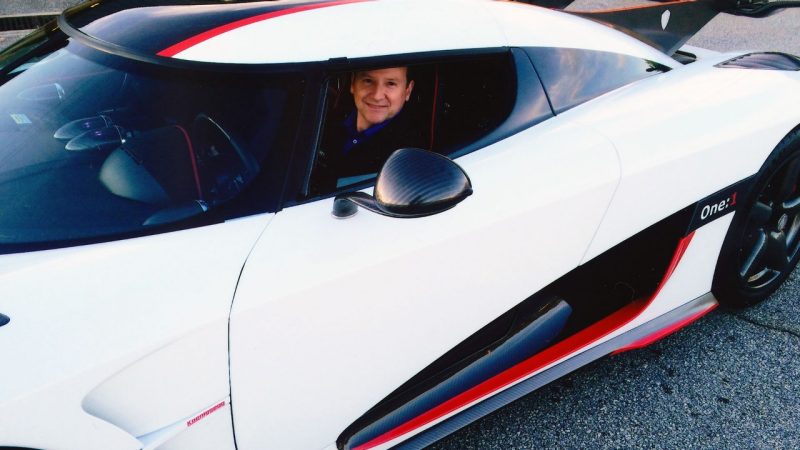 Where the rubber meets the test track: Kevin Fuller pairs his passions for racing and research , article
A 35-year career at Michelin put Fuller ‘90 in the driver’s seat countless times. He found his way to the test track through racing and an education in engineering.
-
Article Item
 From novice to NASCAR , article
David Wilson, ’84 on Toyota Racing Development and the power of a team.
Bioengineering is a high impact, emerging area of study within Mechanical Engineering that investigates the mechanics of living systems across a wide range of scales—from bacteria and single cells to large, complex organisms such as bats and octopuses. Students engage in research spanning biomechanics, mechanobiology, bioinspired engineering, and bio-hybrid engineering, applying mechanical science and engineering principles to questions in human health, biology, and technology.
Research opportunities in the realm of human health include cancer, human health topics such as cancer and reproductive mechanics, as well as the study of how organisms sense, move, breathe, and adapt. These discoveries drive the development of transformative, biologically inspired systems and novel sensors for disease detection and environmental monitoring. This field offers students the chance to connect discovery and innovation while addressing challenges in health, sustainability, and the future of engineered systems.
To re-imagine the technologies of the future, other research opportunities draw inspiration from biological functions such as actuation, respiration, and sensing as well as adaptive system-level strategies of animals. These are translated into applications such as drug delivery mechanisms and bio-inspired robotics and sensors.
Undergraduate Electives
- ESM 4204 Musculoskeletal Biomech (Fall)
- ESM 4224 Biodynamics and Control (Spring)
- ESM 4234 Mechanics of Biological Sys (Fall)
- ESM 4245 Mech of Animal Locomotion I (Fall, odd years)
- ESM 4246 Mech of Animal Locomotion II (Fall, even years)
- ESM 4304 Hemodynamics I (Spring)
- ME 4034 Bio-Inspired Technology (Spring)
- ME 4134 Cell Mechanobiology (Fall)
- ME 4344 Bio Transport Phenomena (Fall)
Graduate Courses
- ME 5054 Experimental Methods and Data Analysis (Spring)
- ME 5034 Bioinspired Technology (Spring)
- ME 5134 Cell Mechanobiology (Fall)
- ME 6754 Computational Modeling in Impact Biomechanics (Spring)
- ESM 5245 Mechanics of Animal Locomotion (Fall, odd years)
- ESM 5246 Mechanics of Animal Locomotion (Fall, even years)
- ESM 5305 Biomechanics of the Cardiovascular System (Spring)
- ESM 6164 Computational Modeling in Impact Biomechanics (Spring)
Faculty working in this area
Labs in this area
-
Article Item
 From running to research: Engineering student interns at Adidas , article
Combining a mechanical engineering major with a biomedical engineering minor, senior John Linehan used a six-month stint with Adidas in Germany to explore the biomechanics of athletic shoes.
-
Article Item
 Aziz Traore takes it apart , article
What do broken radios, cars, cancer studies, and research development have in common? Aziz Traore ’09, Ph.D. ’14 built a bio-inspired career on those foundations.
When energy travels, it creates a response. Whether it travels across a solid surface or through the air, the study of those effects yields possibilities for automotives, medical devices, the power grid, electronics, and more.
Undergraduate Electives
- ME 3604 Kinematics/Dynamics of Machinery (Spring)
- ESM 4114 Nonlinear Dynamics & Chaos (Fall, even years)
- ESM 4224 Biodynamics and Control (Spring)
Graduate Courses
- ME 5054 Experimental Methods and Data Analysis (Spring)
- ME 5514 Vibrations of Mechanical Systems (Fall)
- ME 5544 Linear Systems Theory (Fall)
- ME 5554 Applied Linear Systems (Fall)
- ME 5564 Applied Linear Control (Spring)
- ME 5574 Nonlinear Systems Theory (Fall)
- ME 5584 Convex Optimization (Spring)
- ME 5654 Multibody System Dynamics (Fall)
- ME 5734 Advanced Engineering Acoustics (Spring)
- ME 6544 Linear Control Theory (Spring)
- ME 6574 Adaptive Control Systems (Spring)
- ME 6604 Model Predictive Control for Agile Robots (Spring, odd years)
- ME 6744 Chaos & Nonlinear Dynamics (Spring, odd years)
- ESM 5304 Mechanical and Structural Vibrations (Fall)
- ESM 5414 Nonlinear Systems (Fall, even years)
- ESM 6314 Advanced Dynamics (Fall, even years)
Faculty working in this area
Labs in this area
-
Article Item
 Naval research grant leads to a bubbly solution to hearing protection , article
Aboard an aircraft carrier, jet engine noise is an ever-present concern. This research team is leading a project to lower the risk posed to the hearing of naval personnel.
-
Article Item
 Team works to deliver wireless power through sound waves , article
Shima Shahab is leading a team that is using acoustic energy waves to send power to batteries that might be difficult to access.
Energy is fundamental to the sustainability and advancement of human civilization. With this resource, we are able to sustain life, provide mobility, and affect the world around us. This takes on many forms, from nano-scale materials to giga-scale grids, with ever-higher efficiency and lower costs. From source to point of use, improved technologies are needed to provide energy in ways that are economical, environmentally sustainable, and socially acceptable. Students choosing this area of study will explore conventional and renewable resources, advanced systems for converting resources into motive or electrical energy, and efficient systems for using energy to meet human needs.
Studying energy systems within the Department of Mechanical Engineering trains students to address this global challenge through research at the frontiers and education on the fundamentals, empowering the next generation of creative thinkers and problem solvers to build a cleaner, smarter, and more resilient world. Studies will explore conventional and renewable resources, advanced systems for converting resources into motive or electrical energy, and efficient systems for using energy to meet human needs.
Undergraduate Electives
- ME 4164 Energy Systems for Building (Fall)
- ME 4194 Sustainable Energy Solutions (Fall)
- ME 4204 Internal Combustion Engines (Spring)
- ME4224 Gas Turbines Power/Propulsion (Fall)
- ME4324 Energy Systems Theory/Applications (Spring)
- UAP 4394 Community Renewable Energy (Spring)
Graduate Courses
- ME 5054 Experimental Methods and Data Analysis (Spring)
- ME 5104 Thermodynamics (Fall)
- ME 5214 Combustion (Spring)
- ME 5424 Turbomachinery (Spring)
- ME 5464 Comp Meth Thermo fluid Eng ME (Spring)
- ME 5794 Optimization Techniques in Engineering (Spring)
- ME 6104 Advanced Topics in Thermodynamics (Fall, odd years)
Faculty working in this area
Labs in this area
-
Article Item
 Alum navigates the ‘valley of death’ with skills learned bringing a new lab to life , article
As a doctoral student in mechanical engineering, Siddhartha "Sid" Gadiraju '18 helped build the Advanced Propulsion and Power Lab, gaining skills that were exactly what he needed to excel in his job at a climate tech startup.
Mechanics is the study of how bodies and materials move and deform under loading. Foundational and inherently interdisciplinary, the Mechanics Focus Area develops the theoretical, computational, and experimental understanding and methods that predict this behavior and underpin the design and analysis of complex engineered and natural systems.
Undergraduate Electives
- ESM 3054 Mech Behavior of Materials (Spring)
- ESM 4024 Adv Mech Behavior of Materials (Spring)
- ESM 4044 Mechanics of Composite Material (Fall)
- ESM 4084 Engineering Design Optimization (Spring)
- ESM 4114 Nonlinear Dynamics and Chaos (Fall, even years)
- ESM 4444 Stability of Structures (Spring, odd years)
Graduate Courses
- ME 5074 Mathematical Methods (Fall)
- ME 5264 Mechanics of Adhesive Bonding and Interfaces (Fall, odd years)
- ME 5754 Introduction to Perturbation Methods (Spring)
- ESM 5014 Introduction to Continuum Mechanics (Spring)
- ESM 5024 Intro to Solid Mechanics (Fall)
- ESM 5044 Advanced Mechanics of Composite Materials (Fall)
- ESM 5054 Introduction to Fluid Mechanics (Fall)
- ESM 5064 Structural Optimization (Fall)
- ESM 5144 Deformation and Fracture of Materials (Spring)
- ESM 5174 Polymer Viscoelasticity (Spring)
- ESM 5224 Advanced Musculoskeletal Biomechanics (Fall)
- ESM 5314 Intermediate Dynamics (Spring)
- ESM 5734 Introduction to the Finite Element Method (Fall)
- ESM 5744 Energy and Variational Methods in Applied Mechanics (Fall, odd years)
- ESM 6734 Finite Element Analysis (Spring, even years)
Faculty working in this area
Labs in this area
-
Article Item
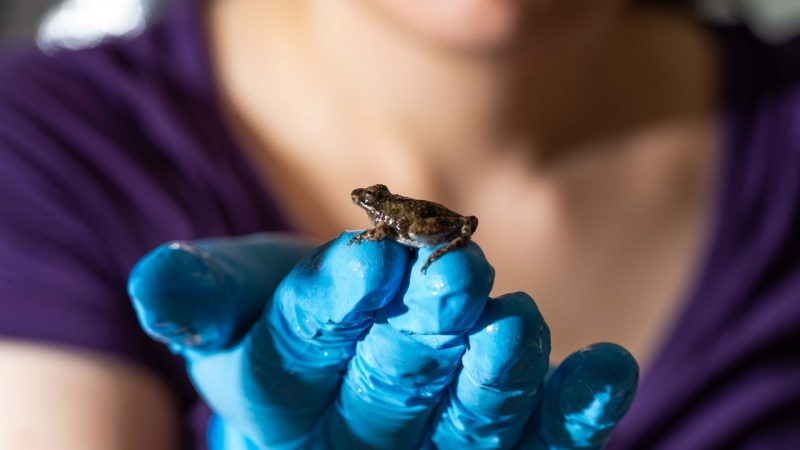 A fast-moving belly flop: Researchers unveil the unique skills of cricket frogs , article
The way cricket frogs move across the surface of water has long been thought to resemble walking on water, but researchers in the lab of Jake Socha have discovered a different reality.
-
Article Item
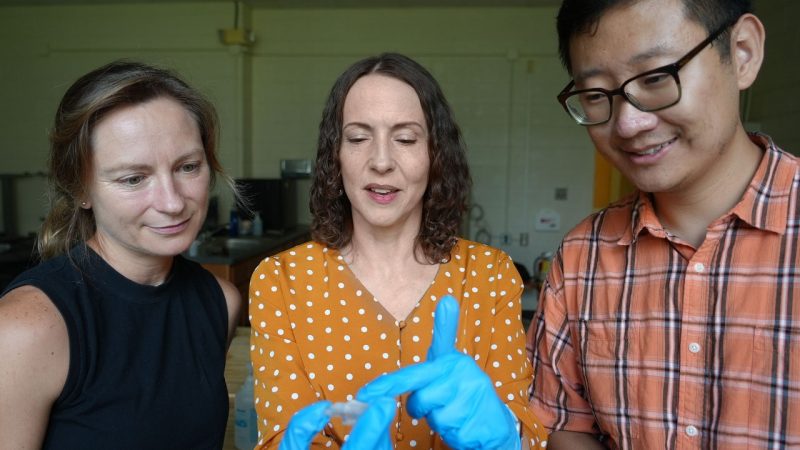 Anne Staples receives National Institutes of Health Trailblazer Award to develop featherweight drug delivery devices , article
Patients who receive drug delivery from a wearable device might struggle with its bulkiness. A new device is under development to solve that problem with funding from the National Institute of Biomedical Imaging and Bioengineering.
The use of nuclear energy, the policies surrounding its implementation, and the safety of its deployment are the strengths of faculty in the Nuclear Engineering Focus Area. Members of this team have been instrumental in the expansion of nuclear energy in Virginia, and maintain international partnerships to offer highly competitive opportunities to students.
Undergraduate Electives
- NSEG 3145 Nuclear Engineering I (Fall)
- NSEG 3146 Nuclear Engineering II (Spring)
- NSEG 3604 Radiation Detect/Protect/Shield (Fall)
- NSEG 4204 Nuclear Fuel Cycle (Spring)
- NSEG 4214 Nuclear Power Plant Ops (Spring, even years)
- NSEG 4424 Reactor Thermal Hydraulics (Fall)
Graduate Courses
- NSEG 5114 Nuclear Eng Fundamentals (Summer)
- NSEG 5124 Nuclear Reactor Analysis (Spring)
- NSEG 5134 Monte Carlo Particle Transport (Fall)
- NSEG 5204 Advanced Nuclear Fuel Cycles (Fall, odd years)
- NSEG 5284 Nuclear Nonproliferation, Safeguards, and Security (Fall)
- NSEG 5424 Reactor Thermal Hydraulics (Fall)
- NSEG 5504 Radiation Effects on Metals and Alloys (Spring)
- NSEG 5514 Structural Materials Degradation in Nuclear Power Sys. (Fall, even years)
- NSEG 5604 Radiation Detection and Shielding (Spring)
- NSEG 6124 Particle Transport Theory, Methods, and Applications (Spring, odd years)
- NSEG 6334 Nuclear Reactor Safety (Spring, even years)
Faculty working in this area
Labs in this area


Transforming ideas into physical form is the focus of this area of study. This includes a deep dive into prototyping, testing, and problem solving; graduate coursework also includes exploration of global collaborative product development, project data management, and collaborative product data management.
Undergraduate Electives
- ESM 4084 Engr Design Optimization (Spring)
- ME4614 Mechanical Design II (Spring)
- ME4624 FEA Practice in Mech Dsn (Fall)
- ME4634 Intro to CAD and Mfr (Spring)
- ME4644 Intro to Rapid Prototyping (Fall)
Graduate Course Options
- ME 5634 Finite Elements in Machine Design (Fall)
- ME 5644 Rapid Prototyping (Spring)
- ME 5664 Global Collaborative Product Development (Fall)
- ME 5794 Optimization Techniques in Engineering (Spring)
Faculty working in this area
Labs in this area
Robotics integrates dynamics, control, learning, and mechatronics to develop intelligent and groundbreaking innovations. Students have options in both rigid and soft robotics, from small-scale robots that can rest on your fingertip to large ones which occupy entire rooms. Machine learning and AI are often integrated, or students may choose to take the route of their own programming, computing, and controls.
Undergraduate Electives
- ME3704: Introduction to Mechatronics (Spring)
- ME4044 Soft Robotics (Spring)
- ME4524 Intro to Robotics/Automtn (Fall)
- ME4744 Mechatronics Theory & Appl (Fall)
- ME4824 Human-Robot Interaction (Spring. even years)
- ME4864 Micro/Nano-Robotics (Fall)
Graduate Courses
- ME 5044 Soft Robotics (Spring)
- ME 5524 Bayesian Robotics (Fall, odd years)
- ME 5704 Robotics and Automation (Fall)
- ME 5735 Advanced Mechatronics (Fall)
- ME 5754 Data-driven Science in Mechanical Engineering (Spring)
- ME 5774 Machine Learning for Mechanical Engineers (Fall)
- ME 5824 Algorithmic Human-Robot Interaction (Spring, even years)
- ME 5864 Advanced Micro/Nano-Robotics (Fall)
- ME 6604 Model Predictive Control for Agile Robots (Spring, odd years)
Faculty working in this area
Labs in this area
-
Article Item
 Philanthropy supports student team in global robotics competition , article
With support made possible through the Des Champs Chair, the VEX-U Robotics team is turning mechanical engineering departmental backing into hands-on learning and career-defining experiences. The endowed chair, established by alumnus Nick de Champs and his wife Rebecca, provides flexible funding that allows leadership to invest directly in student experiences.
-
Article Item
 But first, pizza: Team creates assistive robotics that can make you a meal , article
Could robots help those with mobility issues make a pizza? With support from the National Science Foundation, a team of Virginia Tech mechanical engineers are using robotic grippers and artificial intelligence to make that idea a reality.
The movement of fluids and heat has a wide variety of applications ranging from thermal management and propulsion to advanced manufacturing and health care technology. Research in this area drives new breakthroughs through physical testing and computational modeling.
Undergraduate Electives
- AOE 3114 Aerodynamics/ Compressibility (Fall & Spring)
- AOE 4064 Fluid Flows in Nature (Spring)
- ME 4324 Energy Systems Theory/Applicatoins (Spring)
- ME 4464 Intro to Compressible Flows (Spring)
- PHYS 3704 Thermal Physics (Spring)
Graduate Courses
- ME 5054 Experimental Methods and Data Analysis (Spring)
- ME 5104 Thermodynamics (Fall)
- ME 5214 Combustion (Spring)
- ME 5304 Conduction and Radiation Heat Transfer (Fall)
- ME 5314 Convective Heat and Mass Transfer (Spring)
- ME 5404 Fluid Dynamics (Fall)
- ME 5444 Interfacial Fluid Mechanics (Spring, even years)
- ME 5454 Interfacial Thermodynamics and Transport (Spring, odd years)
- ME 5464 Computation Methods in Fluid-Thermal Engineering (Spring)
- ME 6104 Advanced Topics in Thermodynamics (Fall, odd years)
- ME 6444 Verification and Validation in Scientific Computing (Spring)
- ME 6454 Microfluidics and Nanofluidics (Spring)
- ME 6744 Chaos & Nonlinear Dynamics (Spring, odd years)
- ESM 5554 Turbulence and Turbulent Flows (Fall)
- ESM 6254 Turbulence Modeling and Simulation (Spring)
Faculty working in this area
Labs in this area
-
Article Item
 Leaping puddles create new rules for water physics , article
In a new study published in Nature Communications, Jiangtao Cheng's team breaks previous boundaries for the size of water that can be propelled into the air using surface tension.
-
Article Item
 A fix for frost: Engineers use electricity to zap ice without heat or chemicals , article
Every sheet of frost contains ionic defects. In a new paper published in Small Methods, Jonathan Boreyko’s team uses high voltage to polarize these ions and rip off the frost.